
Property renovators’ and house flippers’ cleaning is a staged process that removes renovation residue and prepares a home for sale, photography or handover. Unlike routine housekeeping, it needs clear boundaries between building work, specialist residue removal and final presentation.
- Cleaning for house flippers works best after dust-producing trades finish, with separate checks before photography and handover.
- Use post-renovation cleaning for construction residue; do not assume a standard bond clean covers it.
- Sparkleclean bond cleaning is best for residential tenants preparing to return a rental property.
- Match carpet cleaning, oven cleaning and window cleaning to the property's actual condition, not a generic package.
Why cleaning matters for property renovators and flippers
A finished renovation and a presentation-ready home are different outcomes. Paintwork, cabinetry and flooring need an inspection without loose dust, smears or packaging obscuring their condition. Cleaning also gives you a clear point to record what still needs a trade’s attention.
For your 2026 project plan, separate cleaning from defect rectification. A dusty benchtop needs cleaning; a scratched benchtop needs assessment. Asking a cleaner to solve both creates an unclear brief and risks the wrong treatment.
Start with the deep cleaning guide for post-renovation homes when defining the work. Your scope should describe the residue, affected surfaces and access conditions, not simply request a thorough clean.
Flippers also need to distinguish sale presentation from rental obligations. A property being sold does not have the same handover purpose as a tenant returning a rental, even when both need clean kitchens, bathrooms and floors.
How to organise cleaning for house flippers
1. Inspect the property before assigning cleaning tasks
Walk through every room yourself with a phone and a written checklist. Record loose dirt, settled dust, adhesive residue, paint splashes and visible damage separately. This is the manual starting point; you do not need a paid system to create a useful scope.
Keep unknown materials out of the ordinary cleaning list. Suspected asbestos, uncontrolled construction dust, exposed wiring and unstable fittings need appropriate assessment before cleaning starts. Do not ask a domestic cleaner to work around an unresolved site hazard.
Name the problem before choosing the treatment. A mark on new glass is not automatically removable dirt, and an aggressive attempt to remove it risks damaging the surface.
- Photograph existing scratches, chips and stains before work begins.
- Record flooring, benchtop and tapware materials where known.
- Flag unfamiliar coatings and residues for the installer’s advice.
- Separate cleaning tasks from repairs and hazardous-material work.
2. Schedule cleaning around completed trades
Build your 2026 cleaning schedule backwards from photography, staging and handover. Use 3 stages: site clearance, detailed cleaning and presentation touch-up. These are planning stages, not a promise that every property needs the same number of visits.
Remove ordinary packaging and arrange building-waste disposal before detailed work. Finish sanding, drilling and cutting first. If trades must return, agree which areas they will enter and who will restore those areas afterwards.
For a straightforward project, manage this with a shared calendar and a room checklist. Appoint one person to release the property for cleaning; conflicting instructions from owners, agents and trades make the sequence harder to control.
- Complete dust-producing work before the detailed clean.
- Confirm water, power and safe access are ready.
- Keep staging deliveries out of unfinished cleaning zones.
- Reserve a final touch-up after necessary return visits.
3. Match the cleaner to the job
Write your own room-by-room scope before requesting professional help. A cleaner can then assess a defined job rather than interpret a phrase such as sale-ready or builders clean. Include photos and state whether the home is vacant, furnished or still being worked on.
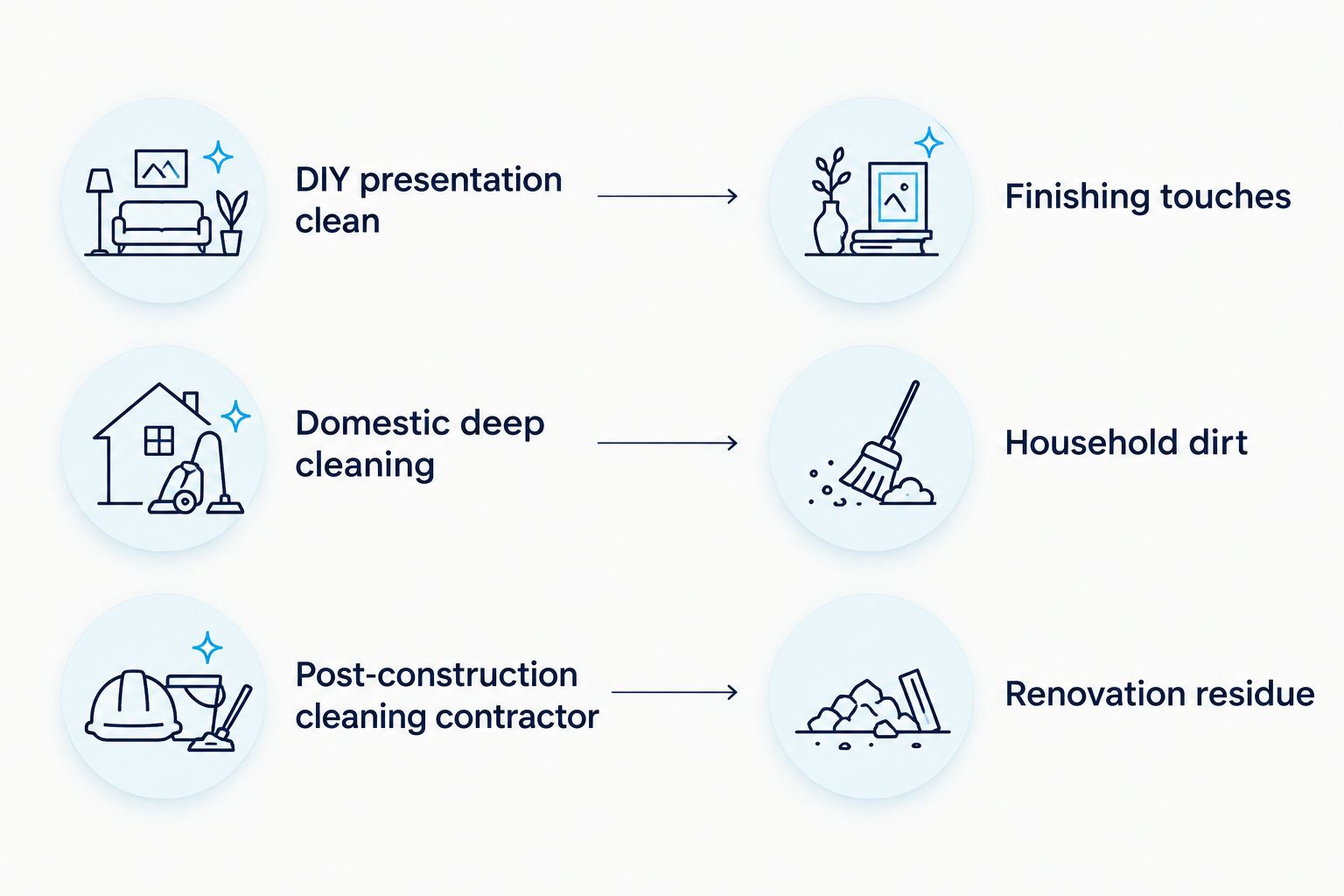
Choose a post-construction cleaning contractor for construction residue that falls within that contractor’s confirmed scope. Choose domestic deep cleaning for accumulated household dirt. These services overlap in some tasks, but their names do not establish identical inclusions.
Sparkleclean bond cleaning is best for residential tenants preparing to return a rental property. Sparkleclean provides end-of-lease cleaning, including carpet steam cleaning, oven deep cleaning and window cleaning. Those services fit a tenant’s handback brief; confirm suitability separately for renovation residue rather than treating bond cleaning as a builders clean.
- Describe the work completed and residue left behind.
- Ask for written inclusions, exclusions and access requirements.
- Confirm experience with the materials installed in your home.
- Assign specialist work separately when it falls outside scope.
4. Remove dust without damaging new finishes
Start with the manufacturer’s care instructions and a test in an inconspicuous area. For ordinary settled dust on a site cleared for cleaning, work from higher surfaces downwards and leave floors until the overhead work is finished. Use equipment suited to the dust and surface involved.
Construction dust requires more care than household dust. Do not dry-sweep or use an ordinary domestic vacuum for suspected hazardous construction dust; stop and arrange suitable controls and specialist advice.
Fresh paint, sealants and coatings also need their specified curing conditions. Cleaning a finish because it looks dry is not a substitute for checking the installer’s instructions.
- Check ledges, door tops and cupboard interiors before floors.
- Use clean cloths rather than spreading residue between rooms.
- Follow surface-specific product and dilution instructions.
- Refer paint, grout haze and adhesive removal to suitable expertise.
5. Detail the rooms buyers will inspect closely
Use a simple room checklist to inspect kitchens, bathrooms, glazing and floors. Open cupboards and drawers instead of judging the room only from the doorway. Cleaning for house flippers needs to cover the spaces a buyer can examine, not just the camera angle.
In kitchens, distinguish a new appliance needing a careful wipe from a retained oven needing a deep clean. In bathrooms, separate removable residue from damaged grout, failed sealant or an unresolved moisture problem. Cleaning does not repair those defects.
Sparkleclean offers oven deep cleaning, carpet steam cleaning and window cleaning within its end-of-lease services. Confirm the relevant task and property conditions before booking; do not assume every specialist task sits inside one standard scope.
- Check cupboard shelves, hinges and drawer edges.
- Inspect shower screens, mirrors and accessible fittings.
- Examine window tracks as well as the glass.
- Record carpet stains separately from permanent wear or damage.
6. Check presentation before photography
Plan 2 walkthroughs: one before photography and one before handover. This is a recommended control, not a service-duration estimate. The first checks presentation; the second checks what has changed after staging, inspections or final trade attendance.
For your 2026 photography brief, inspect the home in daylight and with its normal lights switched on. Look for streaks on glass, fingerprints on cabinet fronts and dust around edges. View each room from the doorway, then inspect it close up.
Keep the checks practical. A clean room can still contain a fitting awaiting installation or a visible paint defect; send those items to the responsible trade rather than putting them on a cleaning callback list.
- Check reflective surfaces from more than one angle.
- Remove cleaning supplies and packaging from photographed areas.
- Confirm carpets and other cleaned surfaces are dry before use.
- Record outstanding defects separately from missed cleaning.
7. Record the result and protect it until handover
Keep 1 shared checklist per property so everyone works from the same record. Use dated photos and task descriptions that identify the room and surface. A note saying kitchen window track contains dust is more useful than kitchen not finished.
Ask your cleaner how to report an omitted task and what follow-up conditions apply. Do not assume an end-of-lease re-clean policy covers a sale campaign, new trade dust or damage discovered after cleaning.
For the final 2026 handover, compare the property with the agreed scope rather than relying on memory. Protect the completed work by controlling access and checking rooms after anyone returns.
- Save the agreed scope alongside completion photos.
- Log each issue as cleaning, repair or new contamination.
- Nominate one contact to approve follow-up work.
- Recheck access routes and bathrooms after final visits.
Choose the right cleaning approach
The best option depends on what remains in the property, not whether the project is called a flip. Match the service to the residue and handover purpose. A detailed domestic service is not automatically a construction-cleaning service.
| Option | Best for | Main advantage | Key limitation |
|---|---|---|---|
| DIY presentation clean | Minor household dust and finishing touches after safe site clearance | You control the checklist and sequence | You supply the time, equipment and surface knowledge |
| Domestic deep cleaning | Existing household dirt in a completed, accessible home | Covers detailed household cleaning within an agreed scope | Construction residue needs separate confirmation |
| Post-construction cleaning contractor | Renovation residue after building work | Can address a construction-specific brief when confirmed | Hazardous materials, repairs and specialist treatments require explicit arrangements |
| Sparkleclean end-of-lease cleaning | Residential tenants handing back a rental | Provides bond cleaning and the stated carpet, oven and window services | Renovation-residue removal and sale preparation are not established inclusions |
| Specialist surface cleaning | A defined carpet, glass or surface-treatment task | Focuses expertise on a particular material or problem | Does not replace a whole-property clean |
For a mixed job, divide responsibilities by task rather than asking multiple providers to clean the same room without boundaries. The handover between contractors matters as much as the choice of contractor.
Common mistakes property renovators and flippers make
Booking the final clean while trades are still active
A final clean loses its purpose when sanding or cutting continues afterwards. Separate temporary site housekeeping from the presentation clean, and agree who handles residue from return visits.
Treating a bond clean as a construction clean
Bond cleaning addresses a rental handback brief. Paint splashes, grout haze, building debris and hazardous dust need explicit assessment and acceptance, not an assumption based on the service name.
Using stronger chemicals on unfamiliar finishes
A stronger product is not a better match for a new surface. Check the material’s care instructions, test the approved method and stop if the finish changes.
Cleaning around staging furniture
Furniture restricts access to skirting boards, floor edges and sockets. Complete accessible detailed work before staging, then arrange a targeted touch-up for marks introduced during installation.
Signing off from photographs alone
Photos help document the result, but they do not show every track, cupboard interior or floor edge. Walk through the property and record unresolved items before approving completion.
FAQ
What is the best cleaning approach for house flippers?
A staged approach is best: clear the site, complete detailed cleaning after dusty trades, then check presentation before photography and handover. Choose the provider according to the residue and surfaces involved.
Is a bond clean the same as a post-renovation clean?
No, the briefs are different. Bond cleaning focuses on rental handback, while post-renovation cleaning needs explicit agreement about construction dust, residues and new finishes.
When should I book cleaning before real estate photography?
Schedule detailed cleaning after dust-producing trades finish and before staging where practical. Confirm drying requirements and leave room in the schedule to correct missed tasks before photography.
Can I clean renovation dust myself?
Only tackle dust you can identify and manage safely with suitable methods and equipment. Stop for suspected hazardous construction dust or unknown materials, and arrange appropriate assessment rather than dry-sweeping or using a domestic vacuum.
Should I steam clean carpets before selling a renovated house?
Base carpet cleaning on the carpet’s material, condition and care instructions. Check stains and odours separately, and confirm drying conditions before staging or inspections.
Can Sparkleclean clean a house after renovation?
Sparkleclean provides end-of-lease cleaning, including carpet steam cleaning, oven deep cleaning and window cleaning. Ask whether the specific renovation residues and site conditions fit its accepted scope before arranging work.
Does cleaning fix paint marks, scratches and grout problems?
Cleaning does not repair scratches, damaged finishes or defective grout. Identify whether each mark is removable residue or damage, then assign it to a suitable cleaner or trade.
One last thing
Inspect inside the window tracks, not just through the glass. They are easy to overlook during a presentation check, and visible dust there belongs on a specific task list rather than a vague request to redo the room.
For your 2026 project, make the final approval a room-by-room decision. Clean, repaired and ready to photograph are separate checks; sign off each one deliberately.
Related guides
- Cleaning for real estate agents selling homes
- Carpet cleaning for real estate open homes
- Post-construction cleaning for builders
SparkleClean's end-of-lease service comes with a 72-hour re-clean guarantee. Get an instant price — no hidden fees, book in under 3 minutes.