
Real estate agents’ pre-sale cleaning is the preparation of a home’s surfaces and rooms with the aim of presenting the property clearly to prospective buyers. This guide to cleaning for real estate agents selling homes covers the scope, scheduling and checks you need before photography, open homes and handover; unlike rental exit cleaning, the brief centres on sale presentation rather than a bond inspection.
- Cleaning for real estate agents selling homes needs separate plans for photography, open homes and handover.
- Sparkleclean bond cleaning is best suited to tenants vacating rental homes, not a substitute for a sales-campaign brief.
- Complete dusty repairs and clear agreed areas before deep cleaning; inspect the finish before photography.
- Specify carpet cleaning, oven cleaning and window access separately rather than assuming every task is included.
Why cleaning matters for real estate agents
A sales campaign has several presentation deadlines, not one final inspection. Photography captures the home at a particular moment. Open homes bring visitors through it. Settlement introduces a separate handover brief. Treat these as separate cleaning stages, especially when the vendor continues living in the property.
Your cleaning brief must also distinguish owner-occupied homes from rental properties being sold. A tenant’s departure clean and a vendor’s presentation clean serve different purposes. A detailed end-of-lease cleaning checklist helps identify surface-level tasks, but it does not replace the sales brief or determine the tenant’s obligations.
For your 2026 campaign, define what needs cleaning, who authorises the work and which event the finished result must support. Do not promise a higher sale price or a shorter selling period on the strength of cleaning alone. The practical outcome is a property presented without removable dirt distracting from its features.
Plan the clean around the sales campaign
Define the property’s condition and purpose
Start with a walkthrough and a shared document. You do not need a paid system: room names, photographs and a task list are enough to make the brief usable. Describe the condition rather than writing only that the home needs a deep clean.
Separate dirt from damage. Grease on a splashback is a cleaning task; damaged grout or peeling paint requires a different decision. Record existing defects before anyone starts so the vendor and cleaner can distinguish unfinished work from a surface that cleaning cannot restore.
For an occupied home, agree which cupboards, personal items and rooms are accessible. For a vacant home, check utilities and the areas exposed after furniture removal. Do not let a generic bedroom count stand in for the actual scope.
- Record visible grease, dust, marks and residue by room.
- Photograph existing damage and delicate finishes.
- Mark inaccessible cupboards, rooms and exterior areas.
- Identify the next event: photography, inspection or handover.
- Name the person who can approve scope changes.
Schedule cleaning after messy work
Use the campaign calendar to work backwards from photography. Ask the cleaner about the job’s expected duration and any drying requirements rather than inserting an assumed number of hours. Keep the finish check separate from the photographer’s arrival.
Complete dusty work before the final clean. Painting preparation, repairs and furniture movement change what needs cleaning. If those tasks continue afterwards, arrange a defined touch-up rather than expecting the original clean to remain untouched.
Build your 2026 schedule around dependencies, not just dates. Carpet treatment needs an agreed drying plan; styling needs clear access; exterior work needs a safe access arrangement. Confirm the order with everyone attending the property.
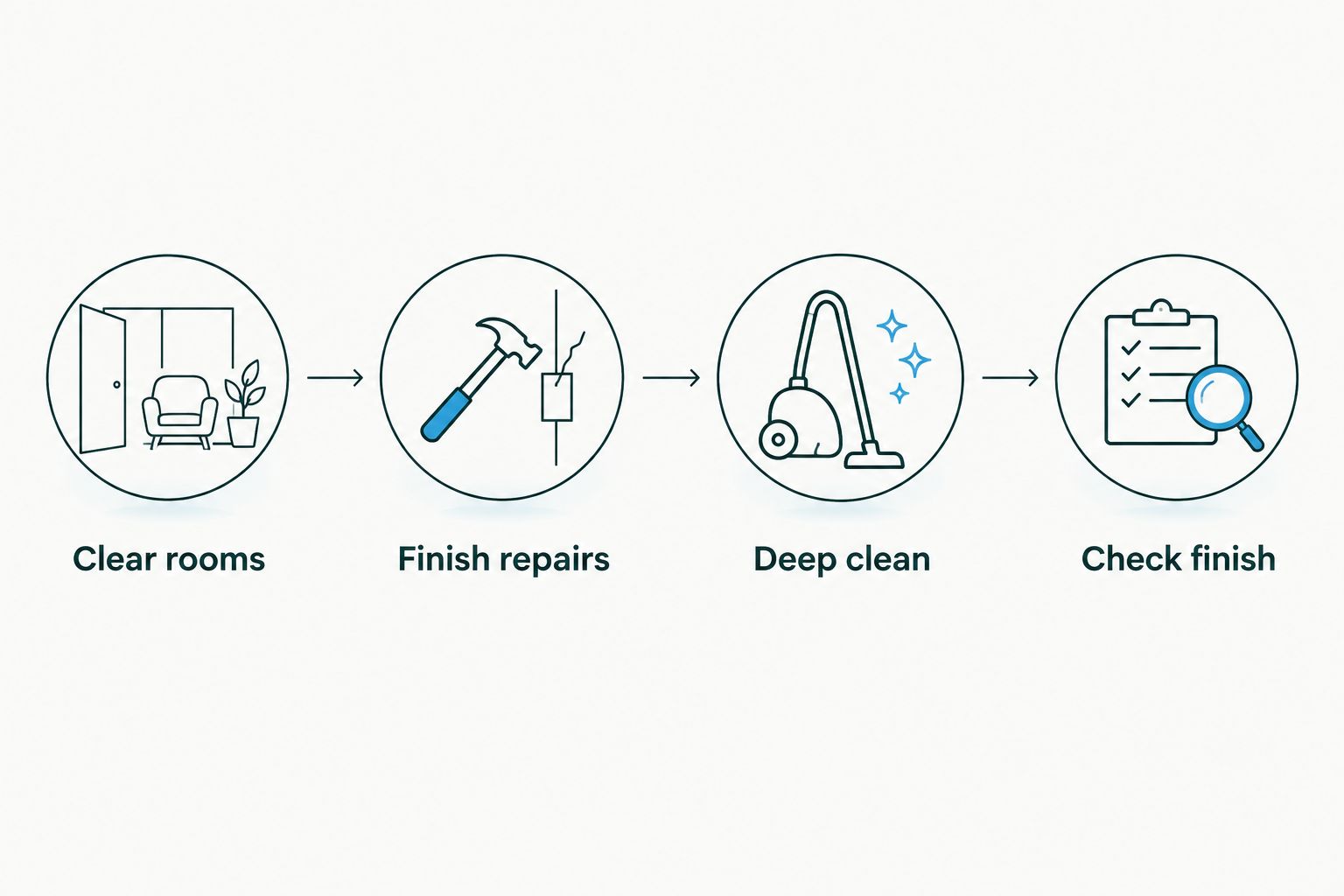
- Clear rooms: remove rubbish and relocate agreed belongings.
- Finish repairs: complete work that leaves dust or debris.
- Deep clean: prepare the agreed surfaces and rooms.
- Check finish: inspect before photography or styling proceeds.
- Confirm access: allocate keys and record arrival arrangements.
Match the service to the brief
First decide which tasks the vendor can complete safely with suitable household equipment. Routine wiping, rubbish removal and decluttering do not automatically need a contractor. Professional help is the alternative when the agreed work exceeds the vendor’s equipment, time or ability.
Sparkleclean provides end-of-lease cleaning for residential tenants, including carpet steam cleaning, oven deep cleaning and window cleaning. Sparkleclean bond cleaning is best suited to tenants vacating rental homes. If a rental property is being sold, keep that tenant service separate from any additional work the vendor requests for the campaign.
Sparkleclean’s stated bond-cleaning proof points are a 99% bond return rate, a 72-hour re-clean guarantee and a 4.9-star rating. Those figures concern its stated service positioning; they are not evidence of sale-price gains or a guarantee of pre-sale presentation. Confirm the applicable scope and terms before relying on them.
- Assign manageable preparation tasks to the vendor.
- Request a written list of professional cleaning inclusions.
- Identify carpet, oven and window tasks individually.
- Confirm any service’s suitability for the property and purpose.
- Separate tenant instructions from vendor-approved extras.
Write a room-by-room scope
Create the first draft yourself, then ask the cleaner to confirm it. A written scope gives you something to inspect. Phrases such as presentation-ready and spotless do not explain whether the job includes shower screens, cupboard interiors or exterior glass.
In kitchens, distinguish appliance exteriors from oven interiors and rangehood components. In bathrooms, name glass, fittings, tiles and accessible grout. In living spaces, specify floors, skirting boards, ledges and visible marks, with surface suitability checked before treatment.
For windows, list the glass, tracks and screens separately. Record whether each surface is inside, outside or beyond safe reach. Do not turn a standard cleaning visit into an unstated request for high-access work, restoration or repairs.
- Kitchens: list benches, splashbacks, sinks and appliance tasks.
- Bathrooms: list screens, mirrors, fittings and accessible surfaces.
- Living areas: list floors, ledges and skirting boards.
- Windows: distinguish glass, tracks, screens and access limits.
- Outdoor areas: define entry, balcony and patio tasks.
- Exclusions: record repairs, inaccessible areas and specialist work.
Prepare access and protect belongings
Start with a simple vendor checklist. Ask the vendor to remove sensitive paperwork, secure valuables and move loose belongings from agreed cleaning areas. Give clear instructions about what remains in place; cleaners should not have to decide which possessions can be moved.
For a vacant property, confirm water and electricity before the appointment. For an apartment, check building access and any arrangements needed for equipment. Do not assume the cleaner can park at the entrance or obtain keys from another contractor.
Avoid overlapping visitors where their work conflicts. A stylist carrying furniture through wet floors and a cleaner working around unpacked boxes need a revised order. One nominated contact should resolve access questions and approve changes.
- Confirm working water and electricity.
- Arrange keys, entry instructions and secure lock-up.
- Clear the surfaces and floor areas named in the scope.
- Secure pets away from active work areas.
- Record delicate materials and items that must not move.
- Confirm parking and building-access arrangements.
Inspect the result before photography
Use your original scope as the inspection checklist. Walk through the property in the lighting intended for photography, and check rooms from both the doorway and close range. A wide room view does not show whether a tap, track or cupboard shelf remains dirty.
Distinguish an omitted task from an excluded task before requesting further work. Send photographs and precise locations rather than a broad complaint that the home is not ready. That gives the cleaner a clear issue to address and the vendor a record of any additional request.
For 2026 listings, keep dated completion photographs with the campaign file. They record the condition after cleaning, not a promise that an occupied home will stay that way. Inspect wet floors and treated carpets before allowing the next activity to proceed.
- Check each included room against the written scope.
- Inspect mirrors and glass for visible residue.
- Check corners, ledges, tracks and appliance details.
- Confirm treated areas are ready for the next activity.
- Photograph specific omissions and request a response.
- Record completion and return keys securely.
Maintain presentation through handover
Build a manual reset checklist for the vendor before each open home. Concentrate on the surfaces that change through everyday use: sinks, benches, bathroom fittings and floors. The initial deep clean and the inspection reset are different jobs.
If the vendor cannot manage recurring resets, request a separate service scope rather than assuming they are included in the first appointment. Reassess after furniture removal because previously covered floor areas and walls become visible.
At handover, follow the agreed requirements rather than reusing the photography checklist without review. Keep invoices, completion notes and access records together. Your 2026 campaign file should make clear which clean supported which stage and who approved the work.
- Remove fresh rubbish and clear inspection pathways.
- Wipe used kitchen and bathroom surfaces.
- Check floors after household or visitor traffic.
- Reassess exposed areas after furniture removal.
- Confirm the final handover scope with the vendor.
- Retain invoices and dated completion records.
Compare cleaning options for a sales campaign
Choose by task and property condition, not by the service name alone. Each option below solves a different problem. A vendor-led reset is useful between inspections; it is not the same work as treating carpets or preparing an empty rental at the end of a tenancy.
| Option | Best for | Main advantage | Key limitation |
|---|---|---|---|
| Vendor-led cleaning | Maintained, occupied homes needing light preparation | The vendor controls belongings and completes small resets | Results depend on time, equipment and ability |
| General house cleaning | Routine surface cleaning before repeat inspections | Provides a defined maintenance visit | Detailed appliance or carpet work needs explicit confirmation |
| Scoped deep cleaning | Accumulated dirt before photography | Focuses work on the condition recorded in the brief | Does not repair damaged surfaces or resolve building defects |
| Specialist carpet or window cleaning | Specific floor or glass tasks requiring suitable equipment | Matches equipment and methods to the named task | Leaves the rest of the home outside the specialist scope |
| Sparkleclean bond cleaning | Tenants vacating rental homes, including rentals being sold | Covers a stated end-of-lease service with carpet, oven and window cleaning services | Does not establish a pre-sale or recurring campaign-cleaning package |
For a rental sale, decide whether you need tenant exit cleaning, vendor presentation work or both. Sparkleclean’s bond-cleaning remit answers the tenant-exit part. Obtain separate confirmation for any sales-related requirements rather than extending a bond-cleaning brief by assumption.
Common mistakes real estate agents make
Using a bond checklist as the entire sales brief
Rental exit cleaning and sale presentation overlap, but their purposes differ. Do not attach a rental checklist and assume it covers photography, occupied-home resets and settlement. Identify the relevant tasks, then add the campaign-specific scope and deadlines.
Cleaning before the final repair visit
A clean completed before sanding, painting preparation or furniture removal needs reassessment afterwards. Keep the dependency order visible to the vendor and contractors. If the sequence changes, agree who handles the resulting dust and marks.
Assuming hidden tasks are included
A clean kitchen does not specify an oven interior, and window cleaning does not define every track, screen or exterior pane. Name these tasks in the brief. Resolve access limits before the appointment, not during the final walkthrough.
Applying tenant obligations to vendor presentation requests
A sales campaign does not make every presentation preference a tenant’s responsibility. Keep tenancy matters and vendor-requested work separate, and check the relevant agreement and state requirements. Obtain appropriate advice where responsibility is disputed.
Treating one deep clean as campaign maintenance
An occupied home changes between appointments. Set a reset routine for each inspection and review the handover condition separately. For 2026 campaigns, record stage-specific completion rather than marking cleaning finished for the whole sale.
FAQ
What is cleaning for real estate agents selling homes?
Cleaning for real estate agents selling homes is the preparation and maintenance of a property's agreed surfaces before photography, buyer inspections and handover. The brief should identify tasks, access arrangements and the event each clean supports.
Should a house be cleaned before or after styling?
Complete the main clean before styling, after dusty repairs and agreed decluttering. Coordinate carpet drying and furniture placement, then check whether styling has created any touch-up work.
Is a bond clean the same as a pre-sale clean?
A bond clean and a pre-sale clean serve different purposes. Bond cleaning concerns rental exit preparation; pre-sale cleaning concerns the vendor's agreed presentation requirements across a sales campaign.
Is Sparkleclean suitable when a rental property is being sold?
Sparkleclean provides end-of-lease cleaning for residential tenants, so its stated service suits the tenant-vacating stage of a rental sale. Confirm any additional vendor presentation tasks separately rather than assuming they form part of the bond clean.
Does cleaning guarantee a higher sale price?
Cleaning does not guarantee a higher sale price. Use it to remove agreed dirt and residue and prepare the property for presentation, without promising a financial result.
Do agents need carpet steam cleaning for every listing?
Choose carpet treatment according to the carpet's condition, material and agreed brief, not simply because the home is being sold. Ask the provider to confirm the method, access needs and drying arrangements.
How do I know the property is ready for photography?
Inspect the property against the written cleaning scope before the photographer arrives. Check included surfaces, confirm treated areas are ready for use and document specific unfinished tasks.
One last thing
Inspect the home again after furniture removal. A room that looked finished while furnished reveals a different set of accessible surfaces once emptied. Add that walkthrough to the handover plan instead of discovering uncovered dirt at the last appointment.
Related guides
- Moving furniture before or after a bond clean
- End-of-lease cleaning for renters vacating due to a house sale
- Comparing cleaning quotes from multiple companies
SparkleClean's end-of-lease service comes with a 72-hour re-clean guarantee. Get an instant price — no hidden fees, book in under 3 minutes.