
There is no single 2026 hoarder property clean out cost before a bond inspection. Get an itemised quote that separates sorting and removal, disposal, any specialist work, and the final bond clean. A bond-clean quote alone does not tell you what it will cost to clear a property full of belongings or rubbish.
- Hoarder property clean out cost bond inspection: get separate scopes for removal, disposal and bond cleaning in 2026.
- A bond clean is best booked after belongings and rubbish are removed so cleaners can reach the surfaces being inspected.
- Sparkleclean bond cleaning is best for tenants who need the final clean; confirm rubbish removal separately.
- Compare quotes by included tasks and exclusions, not by the headline figure alone.
Why this matters
If you book the final clean before arranging removal, cleaners can arrive to find cupboards, floors and fixtures they cannot reach. The immediate problem is access. The financial problem is that removal and disposal can sit outside a bond-clean quote, leaving you with work still to arrange before the inspection.
Use the end-of-lease cleaning guide for hoarder properties to plan the cleaning stage. For a cost decision, start by listing what must leave the property, then ask each provider to state exactly which part of that list they will handle. In 2026, a quote that says only clean-out or bond clean is not specific enough to compare.
How much does hoarder property clean-out cost before a bond inspection?
The cost is the total of the work actually required, not a standard bond-clean fee. Request a written breakdown before accepting a quote. This table shows which tasks to price separately and which option fits each stage; it does not assume that one provider performs them all.
| Scope | Best for | What to confirm | Advantage | Limitation |
|---|---|---|---|---|
| Sorting belongings yourself | Tenants who can identify what to keep before removal | What stays, what goes and who has permission to decide | You retain control over personal items | Sorting does not remove rubbish or clean surfaces |
| Rubbish removal and disposal | Properties with unwanted items that must leave before cleaning | Items accepted, loading, disposal and access | Clears space for the final clean | Does not establish that the property is inspection-ready |
| Specialist assessment or work | Areas with an apparent safety or contamination concern | What work is needed, who will do it and what is excluded | Separates the concern from ordinary cleaning | Adds a distinct scope to organise |
| End-of-lease bond clean | A cleared rental needing its accessible surfaces cleaned | Rooms, fixtures, appliances and any extras included | Addresses the cleaning stage of the exit | Cannot replace a clean-out or make blocked areas accessible |
These are different services, not interchangeable quotes. If you can sort and remove items yourself, you still need to account for disposal and the final clean. If someone else will clear the property, ask whether their work ends when items are removed or includes cleaning the newly exposed areas. Do not infer the answer from the service name.
Build a quote from the work, not the room count
A provider needs to know what occupies the property before defining the job. Send clear photographs of each room, cupboards that need emptying, and any garage or outdoor area included in the tenancy. Show the access route as well. A room count alone cannot show whether floors and fittings are reachable.
Ask each provider to identify the tasks they can perform, the tasks they will not perform, and any decisions you must make first. If belongings might be valuable or sensitive, arrange sorting before anyone removes them. That prevents a disposal quote from quietly becoming a decision about what you keep.
Check disposal separately from labour
Loading items is not the same task as disposing of them. Ask where responsibility for disposal sits in the written scope and whether any item types are excluded. If you are comparing a removal quote with a cleaning quote, keep them as separate lines in your plan rather than treating either one as the whole job.
The same rule applies to rooms that look clear but contain full cupboards. If the quote assumes empty cupboards and yours are not empty, the provider cannot assess the work from photographs of the room alone. Open the cupboards for the scope discussion; decide what stays before arranging removal.
The right order before the bond inspection
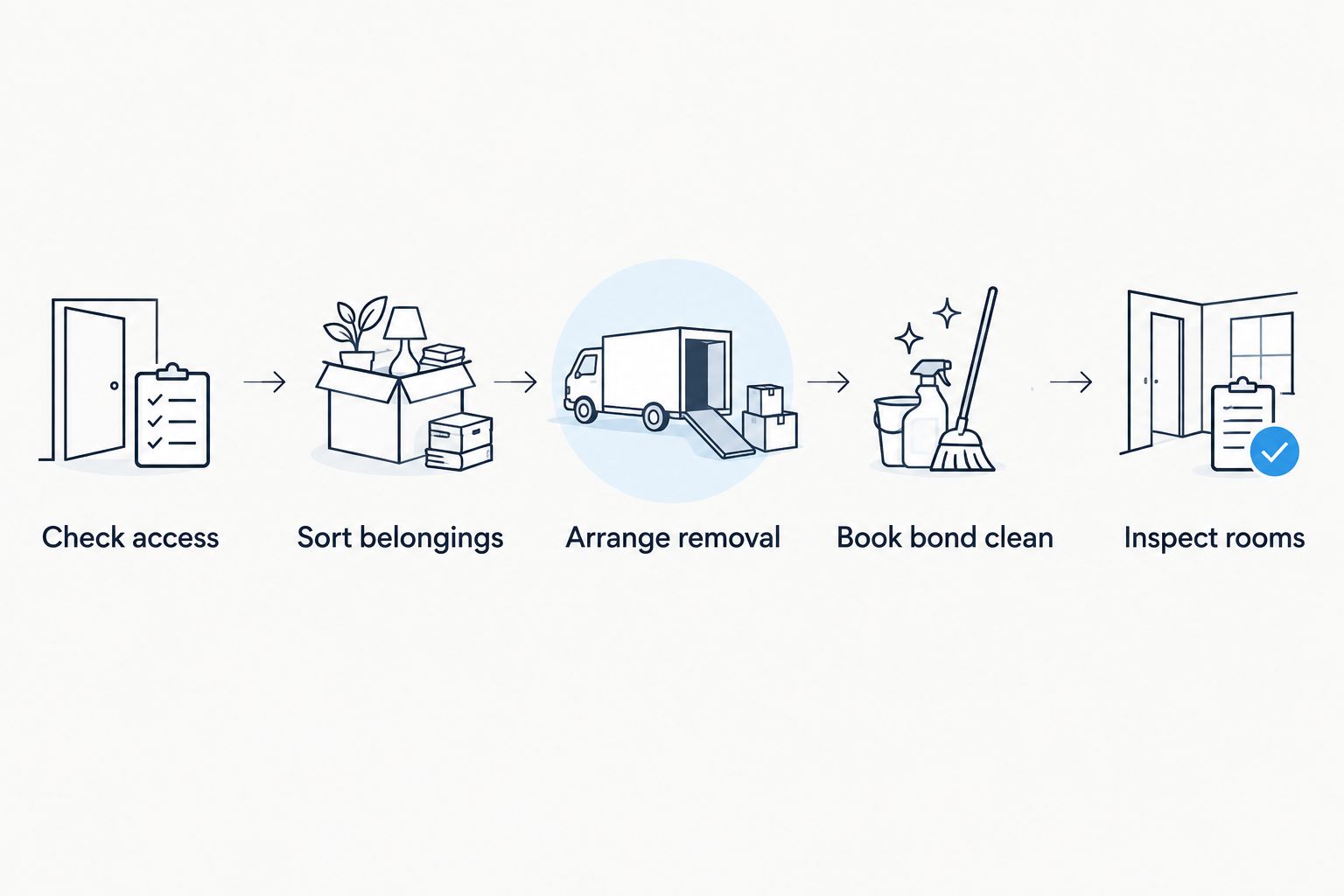
Clear first, clean second, inspect last. That sequence makes the work visible and gives you a chance to identify anything still blocked or missed before the property manager sees it. In 2026, build the sequence around your actual handover and inspection arrangements rather than assuming the cleaner can work around stored items.
- Check access. Walk through every room and identify floors, fittings, appliances and storage spaces that belongings prevent you from seeing or reaching.
- Sort belongings. Separate what you will keep from what can be removed. Set aside documents and personal items for your own review.
- Arrange removal. Confirm what the removal provider will take, what you must move yourself and who handles disposal.
- Book the bond clean. Describe the property's condition after removal and get written confirmation of the cleaning scope.
- Inspect rooms. Check accessible surfaces and compare the result with your entry condition report and the agreed cleaning scope.
Each step answers a different question. Sorting determines what can go; removal creates access; cleaning addresses the surfaces left behind. Skipping the removal stage does not make the cleaning stage larger or more effective. It leaves parts of the rental unavailable for cleaning.
If you cannot clear everything at once, identify which rooms will be ready first and tell the providers. Do not schedule a final clean on the assumption that remaining piles can simply be worked around. Ask what must be empty before cleaning starts, then confirm that condition before the appointment.
Why the clean-out cost varies
The quote changes with the work required. Give providers the same description of the property so their scopes can be compared without guessing what each one assumed.
- Volume of belongings and rubbish. More items to sort or remove create a different task from cleaning an empty room. Describe what occupies each space rather than calling the property cluttered.
- Your sorting decisions. If you have already separated items to keep, the removal scope is clearer. If nobody has authority to decide, resolve that before booking disposal.
- Access to rooms and fixtures. Blocked floors, ovens, windows and cupboards affect what a cleaner can reach. Show the condition after removal where possible.
- Items needing separate handling. Tell the provider about anything they must assess before accepting the job. Do not assume an ordinary cleaning or removal quote covers an apparent safety concern.
- Areas covered by the tenancy. Include any garage, balcony or outdoor storage space that needs attention. A quote for indoor rooms will not describe those spaces unless you raise them.
- The inspection sequence. A removal appointment, final clean and your own check must fit before handover. Confirm the order when requesting quotes instead of relying on a single appointment to do everything.
Compare written inclusions and exclusions before comparing figures. A quote covering cleaning after you empty the property is not directly comparable with one covering removal as well. Ask each provider to revise the scope against the same photographs and task list.
What to ask before accepting a quote
Send a concise brief. State which spaces are affected, what you have already sorted, what needs removal, and when the property will be accessible for the clean. Ask for the response in writing so you can check whether the provider has priced the job you described.
- Will you sort items, remove them, dispose of them, clean the property, or perform only some of those tasks?
- Which rooms and storage areas are included?
- What condition must the property be in when your team arrives?
- Which items or conditions are excluded from the scope?
- If a room becomes accessible only after removal, is its cleaning already included?
- How will you identify work that needs a separate specialist before the final clean?
These questions prevent a low-looking quote from answering the wrong question. They also make it easier to plan a different provider for any excluded task. If the reply leaves removal, disposal or post-removal cleaning unclear, request a revised written scope before committing.
Plan your bond clean
Check the cleaning scope after belongings and rubbish are cleared.
Where Sparkleclean fits
Sparkleclean bond cleaning is best for tenants who need the final clean after the property has been cleared; rubbish removal needs a separate confirmed scope. Sparkleclean provides end-of-lease cleaning, including carpet steam cleaning, oven deep cleaning and window cleaning. Ask which tasks apply to your property and whether they are included in your particular booking.
Sparkleclean states a 99% bond return rate, a 72-hour re-clean guarantee and a 4.9-star rating. Those proof points do not tell you the cost of clearing a hoarder property, establish that removal is included, or guarantee an individual bond outcome. Use the written scope to settle what happens before the cleaning team arrives.
The advantage of a separate final-clean stage is clarity: the removal provider clears access, then the cleaner can assess the exposed surfaces. The limitation is coordination. You remain responsible for confirming that the property is ready for the booked clean and that every required task has an assigned provider.
Can I get one quote for the clean-out and bond clean?
You can ask for one quote, but the quote must still separate removal, disposal and cleaning. Check who performs each task and what happens if the property's condition differs from the description you supplied. One total without a task breakdown does not show whether the final clean is covered.
Does a standard bond clean include rubbish removal?
Do not assume rubbish removal is included in a bond clean. Ask the cleaner to confirm it in writing and arrange another provider if it is excluded. A clean can address accessible surfaces; it cannot cover items left behind merely because the booking is described as end-of-lease cleaning.
Should I book the cleaner before the property is empty?
Book around a confirmed clearing plan, and schedule the clean for when the agreed areas will be accessible. You can discuss the job while belongings remain, using photographs and a clear description. Confirm the post-removal condition before the cleaner attends so the quote and the actual work match.
FAQ
How much does a hoarder property clean-out cost before a bond inspection in 2026?
The cost depends on the removal, disposal, specialist work and bond cleaning the property actually needs. Request separate written scopes for those tasks before comparing quotes.
Is rubbish removal part of an end-of-lease clean?
Do not assume rubbish removal is included. Ask the cleaner to list it in the written scope or arrange removal separately before the clean.
Can a bond cleaner work while belongings are still in the rental?
A cleaner can only address surfaces they can access. Confirm what must be cleared before the booking and what cleaning remains possible if belongings are left in place.
What should I photograph for a clean-out quote?
Photograph each affected room, full cupboards and any garage or outdoor area in scope. Include the access route so the provider can see how items will leave the property.
Should I sort personal items before rubbish removal?
Yes, decide what to keep before authorising disposal. Set aside documents and personal belongings so the removal scope covers only items you have approved.
Do I need separate quotes for removal and bond cleaning?
Get separate task breakdowns even if one provider offers both. That makes disposal, exclusions and the final cleaning scope clear before you book.
Does hiring a cleaner guarantee my bond refund?
No individual bond outcome follows automatically from hiring a cleaner. Check the agreed work against the property condition and raise any inspection concerns through the relevant tenancy process.
One last thing
The most useful comparison is not one provider's total against another's. It is the work left unassigned after you read both quotes. Before your 2026 inspection, put sorting, removal, disposal and the final clean on the same checklist. If a task has no named person or provider responsible for it, the clean-out plan is not finished.
Related guides
- End-of-lease cleaning with rubbish and junk removal included
- How to compare bond cleaning quotes from multiple companies
- What landlords check during a bond inspection in Australia
SparkleClean's end-of-lease service comes with a 72-hour re-clean guarantee. Get an instant price — no hidden fees, book in under 3 minutes.