
Yes, you can use your own cleaning products for a DIY bond clean in 2026. Choose products that suit each surface, follow their labels and check your work against the property’s entry condition report. Using your own supplies does not, by itself, determine whether you get your bond back; the condition of the property at handover matters.
- Can I use my own products for DIY bond clean? Yes; choose products by surface, not by what is already in your cupboard.
- Your entry condition report and lease identify what needs attention before the 2026 final inspection.
- Sparkleclean bond cleaning is best for tenants who want professional help with carpet steam cleaning, ovens or windows.
- DIY gives you control but leaves the cleaning and final check to you.
Why this matters
Your property manager will inspect the result, not your shopping list. An expensive cleaner will not help if you miss the oven door, leave residue on a benchtop or overlook a window track. Start with your entry condition report, then use an end-of-lease cleaning checklist for renters to organise the work.
In 2026, the practical question is whether your products can clean the surfaces in your rental without damaging them. A product that works on bathroom tiles is not automatically right for painted walls, timber or carpet. Read the label before you start, and keep the condition you received the property in view as you work.
Can I use my own cleaning products for a DIY bond clean?
Yes. Use your own products if they suit the surfaces and you can clean the property thoroughly before handover. You do not need a cupboard full of specialist bottles, but you do need the right method for each job. The table shows where doing it yourself is straightforward and where a professional clean offers a practical alternative.
| Approach | Best for | Advantage | Drawback |
|---|---|---|---|
| Your own products and equipment | Tenants with time to clean and check every relevant area | You control the products, method and sequence | You supply the equipment, do the work and handle anything missed |
| Professional bond cleaning | Tenants who need help with tasks such as carpets, ovens or windows | A service can take on the agreed cleaning tasks | You must confirm its scope; a booking does not remove every possible bond issue |
If you choose DIY, work through the property in this order:
- Read labels. Match each cleaner to the surface and follow the product’s directions. Do not combine cleaning chemicals.
- Test a patch. Try a product on a small, inconspicuous area before using it across a painted, coated or otherwise delicate surface.
- Clean surfaces. Remove loose dirt first, treat marks with a suitable product, then wipe away residue. Check edges and fittings as well as the obvious open areas.
- Check condition. Compare the finished room with your entry condition report and photos. Record the condition after cleaning, before you hand back the keys.
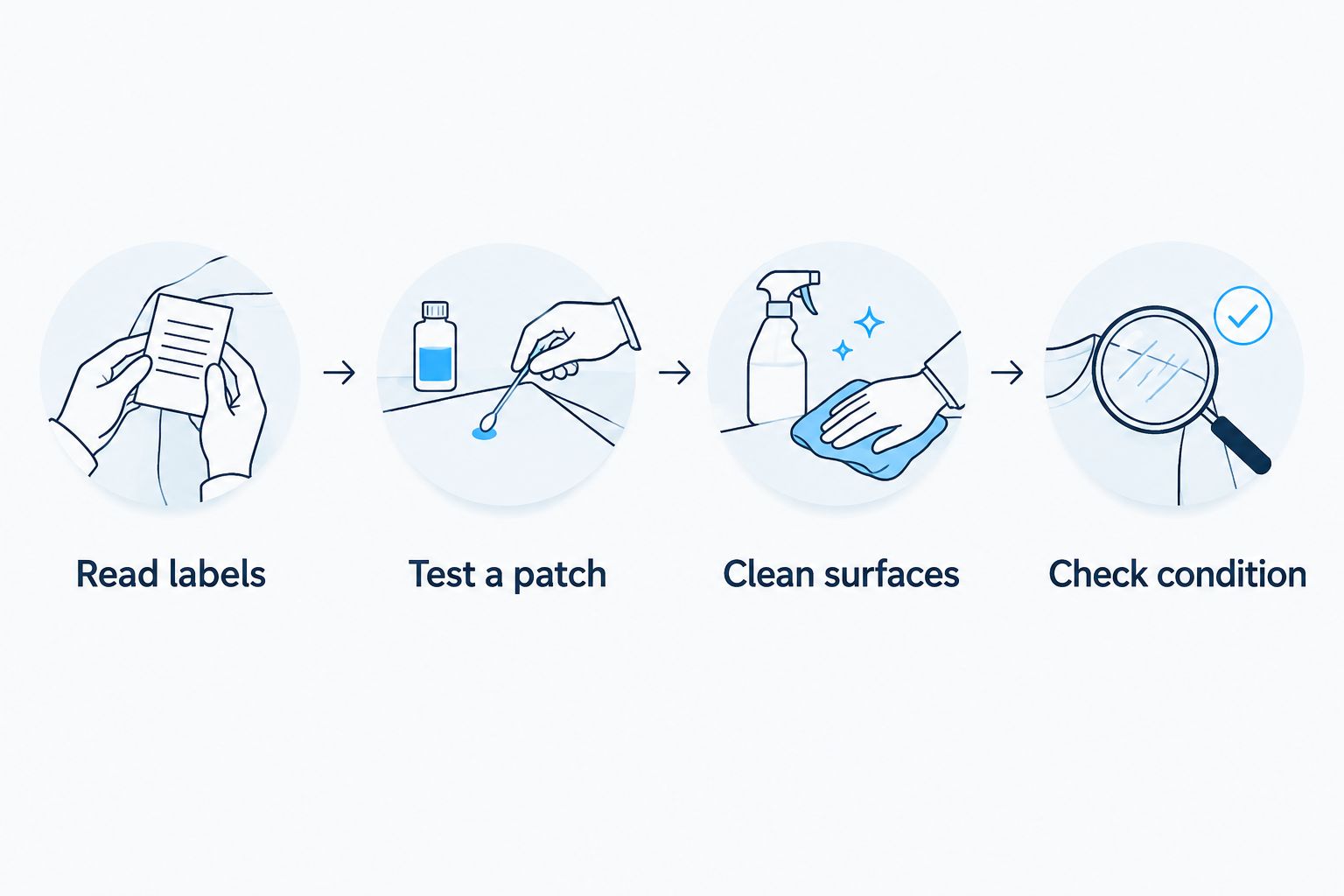
Do a room-by-room check after the surfaces have dried. Wet tiles, glass and benchtops can hide streaks or leftover product. If a cleaner leaves a mark, stop using it rather than applying more; a cleaning task should not become a surface-damage problem.
Which cleaning products should I use on each surface?
Pick a product by the surface and the type of dirt you are removing. The label’s surface directions take priority over a general bond-clean checklist. If the property has care instructions for a particular finish, follow those too. This is especially important where an abrasive tool or a strong cleaner could alter the finish.
- Kitchen benches and splashbacks: Use a cleaner suitable for the material. Wipe away grease, then remove cleaner residue and inspect the surface in good light.
- Oven and stovetop: Check the appliance and product instructions before applying an oven cleaner. Give removable parts attention without assuming every part can be soaked or treated the same way.
- Bathroom fittings and tiles: Choose products suited to the finish. Clean around taps, drains and screen edges, then check for visible residue.
- Windows and tracks: Use a suitable glass cleaner or cleaning method for the panes, and clear dirt from accessible tracks. A clean pane does not make a dirty track disappear.
- Painted walls and doors: Start with a gentle method and test first. Scrubbing a mark harder can damage paint without removing the mark.
- Carpet and other flooring: Check the floor material before applying any liquid. Surface cleaning and carpet steam cleaning are different tasks.
Keep cloths used for the bathroom separate from those used on food-preparation surfaces. Change water and cloths when they become dirty; otherwise, you are moving grime rather than removing it. Let cleaned surfaces dry before deciding whether a mark remains.
In 2026, there is no useful one-product answer for every rental. The same property can have glass, painted walls, metal fittings, sealed surfaces and carpet. Your product selection needs to reflect those differences.
What should I check before buying more supplies?
Check what the rental actually contains before purchasing anything. An unfurnished property with hard floors presents different work from one with carpet, blinds and an oven that needs attention. Your entry condition report and your lease are better starting points than a generic shopping list.
Make a short inventory by room:
- List the surfaces that need cleaning and note any care instructions you have been given.
- Identify areas your current products do not cover safely.
- Check whether you have the equipment to reach and clean accessible fittings, tracks and corners.
- Separate ordinary cleaning jobs from tasks that need specialist equipment or a separate service.
This prevents a common DIY mistake: buying several products for the same easy surface while leaving a difficult task unplanned. If a stain or mark does not respond to a product used as directed, reassess it. Repeatedly applying a stronger product without checking the surface is not a sound cleaning plan.
When does using your own products become a poor fit?
DIY is a poor fit when you cannot safely clean a required surface, do not have the equipment for a relevant task or cannot leave enough time to check your work. Those are reasons to change the plan, not reasons to assume every rental needs a professional clean.
Sparkleclean bond cleaning is best for tenants who want professional help with carpet steam cleaning, oven deep cleaning or window cleaning. You still need to confirm the work you want covered. Sparkleclean lists a 72-hour re-clean guarantee, a 99% bond return rate and a 4.9-star rating; none of those figures replaces a check of the service scope against your property and lease.
The trade-off is clear. With DIY, you choose the products and can return to a missed spot yourself, but you carry out the entire clean. With a professional service, you hand over the cleaning tasks you agree on, but you still need to remove your belongings, communicate access needs and inspect the finished property. Neither approach fixes damage or changes the condition recorded at the start of your tenancy.
If carpets are the main uncertainty, decide separately how they will be cleaned rather than treating a general-purpose spray as a substitute for equipment. The same applies to a heavily soiled oven or windows you cannot clean safely. Choose help for the task you cannot complete properly, not simply because the word ‘bond’ appears on a product or service.
Check your cleaning options
Compare your DIY plan with the professional cleaning tasks you need covered.
Why does the right DIY approach vary by rental?
The answer changes with the property and the condition recorded when you moved in. In 2026, use these factors to decide whether your own supplies are enough:
- Entry condition: The report and photos give you a starting point for comparing the property at handover. Do not mistake an existing mark for a new cleaning task without checking the record.
- Surface materials: Painted, polished, coated and soft surfaces do not all tolerate the same product or tool. Read the directions before treating an unfamiliar finish.
- Type of soil: Loose dust, grease, soap residue and carpet stains call for different methods. Identify the problem before reaching for a stronger cleaner.
- Equipment access: A suitable liquid cleaner does not replace the tool needed to vacuum carpet, clear a track or reach an accessible fitting safely.
- Time before handover: You need enough time to clean, let surfaces dry and inspect them. A rushed final wipe is not a substitute for a room-by-room check.
- Lease and property instructions: Review any relevant cleaning terms and care instructions rather than assuming the same tasks apply to every Australian rental.
These factors also help you decide what not to do. Do not risk damaging a finish to remove a mark that appears on the entry report. Do not treat an inaccessible or unsafe area as a routine DIY task. Make the final inspection of your own work a separate step, after the cleaning is finished.
Do I need professional products to get my bond back?
No; professional products are not the deciding factor. Focus on the property’s condition, the entry record and the cleaning required under your lease. If your household products are suitable and do the job without damage, their branding does not change the result.
Can I do the clean myself instead of booking a bond cleaner?
Yes, you can do the clean yourself. In 2026, choose DIY when you can complete the relevant tasks, check the result and address anything you missed before handover. Choose professional help when a particular task needs equipment or work you cannot provide.
Should I use the same product on carpets, walls and tiles?
No; match each product to its surface. Check its directions and test an inconspicuous spot where a finish is uncertain. A single cleaner is not a substitute for reading the care instructions for carpet, paint and tile.
FAQ
Can I use my own products for DIY bond clean in 2026?
Yes, you can use your own products for a DIY bond clean in 2026. Choose suitable products for each surface and compare the finished property with your entry condition report.
Will a property manager reject my clean because I used household products?
The products alone do not determine the condition of the property. Check your lease and focus on whether the finished surfaces have been cleaned without damage.
Can I use one cleaner throughout the rental?
Do not assume one cleaner suits every surface. Read the label and use a suitable method for each material, particularly carpet, paint and coated finishes.
Do I need a professional cleaner for carpet stains?
Assess the carpet task separately from the rest of the clean. Check your lease, the entry condition and the carpet’s care instructions before choosing DIY cleaning or professional help.
What if a cleaning product leaves a mark?
Stop using that product on the surface. Check the label and surface instructions before trying another method, and document the condition rather than scrubbing harder.
Is Sparkleclean bond cleaning better than doing it myself?
Sparkleclean bond cleaning is a better fit when you want professional help with carpet steam cleaning, oven deep cleaning or window cleaning. DIY remains a sound choice when you can complete and check the relevant work yourself.
What should I check before handing back the keys?
Check each cleaned room against your entry condition report after surfaces have dried. Look at edges, tracks, fittings and other areas that are easy to miss, then record the final condition.
One last thing
The final check is where your DIY clean earns its value. In 2026, put the products away, let the surfaces dry and inspect the rental as someone seeing it for the first time. A missed track is easier to fix before you hand back the keys than after the final inspection.
Related guides
- Professional bond cleaning vs DIY in Australia
- Can you clean carpets yourself instead of paying for steam cleaning?
- What cleaning is a tenant responsible for at end of lease?
SparkleClean's end-of-lease service comes with a 72-hour re-clean guarantee. Get an instant price — no hidden fees, book in under 3 minutes.