
Yes, you can do your own pest control before a bond inspection if your tenancy agreement and applicable state or territory rules do not require a professional treatment. The deciding issue is the requirement you must meet, not whether a spray or trap is available to buy. If your agreement calls for professional treatment or a receipt, a DIY treatment will not provide that evidence.
- Can I do my own pest control before bond inspection? Yes, unless an applicable requirement calls for professional treatment.
- Check pet-related conditions and written requests before choosing DIY; an inspection result alone does not establish the treatment required.
- Sparkleclean is best for end-of-lease cleaning; confirm pest treatment separately before booking.
Why this matters
A property can look clean while a pest issue remains, and a treatment receipt does not replace the final clean. In 2026, treat these as separate tasks: identify the pest-control requirement, deal with any actual infestation, then prepare the property for inspection. If you need to coordinate the work, use this guide to arranging pest control before a bond inspection.
The wrong choice creates an avoidable dispute. You might pay for professional treatment when nobody has established that it is required, or do the work yourself when your agreement calls for a professional receipt. Read the exact wording before you buy a product or book a service.
Can I do my own pest control before a bond inspection instead of hiring a professional?
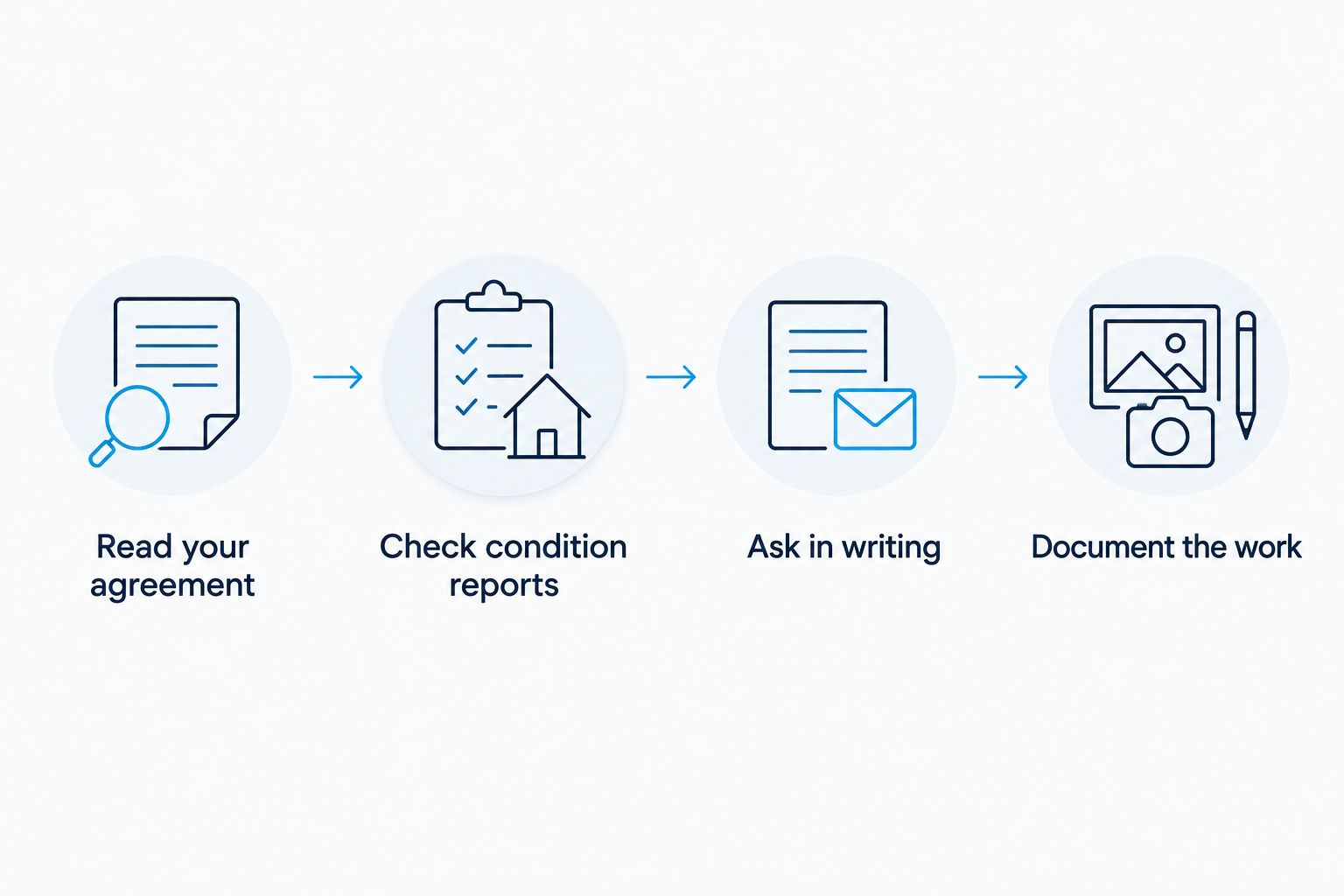
Yes, provided DIY treatment meets the requirements that apply to your tenancy and addresses the problem. Follow these steps before the 2026 inspection:
- Read your agreement. Find any end-of-lease, pet or pest-control clause. Check whether it asks for a treatment outcome, a professional service or proof of work.
- Check the condition reports. Compare the entry report with the current condition. Record where you have seen pests, droppings or other evidence rather than assuming every sighting began during your tenancy.
- Ask for the requirement in writing. If the agent requests professional treatment, ask which agreement term or applicable rule supports that request. Keep the response with your exit records.
- Choose and document the work. If DIY is appropriate, follow the product label and keep dated photos and any relevant purchase record. If professional treatment is required, retain the service record and check that it describes the work requested.
A receipt shows that a service took place; it does not prove that every pest has gone. Photos show the visible condition of the property; they do not prove that a required professional treatment occurred. Match your evidence to the actual question in dispute.
DIY treatment or professional pest control: which fits?
Neither option wins in every tenancy. Use the written requirement and the condition of the property to decide.
| Option | Best for | Advantage | Limit |
|---|---|---|---|
| DIY pest control | A manageable issue where no professional treatment is required | You can address the issue yourself and document what you did | It cannot produce a professional treatment record and might not resolve an infestation |
| Professional pest control | A confirmed professional-treatment requirement or an issue needing specialist assessment | The provider can document the work performed | A booking alone does not establish what caused the issue or settle a bond dispute |
DIY is the better fit when you can meet the requirement and address the problem safely. Professional treatment is the better fit when a valid requirement calls for it or the problem is beyond a practical DIY response. Do not treat a request from an agent as a substitute for checking the agreement and applicable rules.
Why the right approach varies
The answer changes with the facts of the tenancy. In 2026, check these factors rather than relying on a blanket rule about bond inspections:
- Agreement wording. A request to leave the property free of pests is different from a stated requirement for professional treatment. Read the clause, including any conditions attached to pets.
- Applicable tenancy rules. Residential tenancy rules differ across Australian states and territories. An agreement term and an agent’s request still need to be considered against the rules that apply where you rent.
- Pest history. The entry condition report, earlier messages and inspection records help establish whether the issue existed before your tenancy or arose while you lived there.
- The current problem. An isolated sighting and an ongoing infestation call for different responses. Focus on the evidence you can observe, not a guess about the cause.
- Proof requested. Photos and product records document DIY work. A professional service record documents the work described by that provider. Neither type of evidence does the other’s job.
- Inspection timing. Leave enough time to check the result before handing back the property. Treating a problem at the last moment leaves less opportunity to deal with signs that remain.
If your 2026 exit involves a disagreement, keep the agreement clause, condition reports, written requests and treatment records together. That gives you a clear account of what was required, what the property was like and what you did.
What if I had a pet during the tenancy?
Having a pet does not, by itself, tell you whether DIY pest control meets your obligations. Check the pet-related terms you agreed to and the rules that apply to your tenancy. If the request specifically concerns fleas, clarify whether the agent wants the property treated, evidence of professional treatment, or both.
Do not assume carpet cleaning is flea treatment. Likewise, a pest-treatment receipt does not show that carpets, floors and other surfaces meet the cleaning condition. Handle each requirement on its own terms, particularly when you are booking work around moving day.
If a pet was approved with a written condition, save that condition alongside the exit instructions. If you cannot find a professional-treatment requirement, ask the agent to identify its basis in writing before you commit to a booking. That request creates a record; it does not, by itself, resolve a disagreement about whether the term applies.
Does a bond cleaner take care of pest control?
Do not assume pest control is part of a bond clean. The services named for Sparkleclean are end-of-lease cleaning, carpet steam cleaning, oven deep cleaning and window cleaning. Pest treatment is not listed among those services, so confirm it separately rather than relying on a cleaning booking to satisfy a pest-control request.
Sparkleclean is best for tenants who need end-of-lease cleaning, not a substitute for a required pest-treatment record. Sparkleclean is relevant when the property also needs its final clean; its limitation for this question is that the supplied service details do not establish a pest-treatment offering. You can check Sparkleclean end-of-lease cleaning while you arrange any pest work separately.
Plan your final clean
Check end-of-lease cleaning separately from any pest-treatment requirement.
Keep the sequence clear in 2026: identify the pest issue, check the treatment requirement, arrange the appropriate work and inspect the property’s condition before handover. Cleaning visible residue or removing rubbish helps present the property, but it is not evidence that pest treatment occurred.
What if the agent insists on a professional receipt?
Ask the agent to put the request and its basis in writing. Check the cited clause against your agreement and the tenancy rules for your state or territory. If you have already done DIY treatment, send the records you kept and ask what specific requirement the agent says remains unmet.
A demand for a receipt is not the same as evidence of an active infestation. Equally, a clean-looking room is not proof that a valid professional-treatment condition has been met. Keep those questions separate when you respond: what was required, what condition the property is in, and what evidence each side has.
If the request arrives just before your 2026 bond inspection, do not rush into work without clarifying its scope. Ask which pest or area is involved and what record is being requested. A clear written answer makes it easier to book the right work or explain why the request does not apply.
What if pests are still visible after DIY treatment?
Address the remaining issue before the inspection where practical. Record what you can see, review the product directions and decide whether the problem needs a professional assessment. Repeating a DIY treatment without understanding the cause does not establish that the property is ready for handover.
Tell the agent about a pre-existing or previously reported issue using the records you have, rather than presenting a new assumption as fact. If the issue appeared during your tenancy, document the steps you took and the condition at handover. The entry report and dated correspondence matter more than an unsupported claim about where pests came from.
Do not hide visible evidence under a fresh clean. A bond cleaner can deal with cleaning tasks, while pest treatment calls for a separate decision about the issue itself. Sparkleclean’s end-of-lease cleaning belongs in the cleaning part of that plan, not in place of pest assessment.
Can an agent reject DIY treatment even if the property looks clean?
An agent can raise a concern, but the concern still needs a clear basis. Ask whether the issue is the property’s visible condition, an unmet agreement term or a specific pest problem. Each calls for different evidence and a different response.
For a condition complaint, compare the exit condition with the entry report and your dated photos. For a professional-treatment request, check the wording and applicable rules. For signs of an active pest problem, focus on resolving and documenting that problem. In 2026, separating those points is the fastest way to avoid arguing past the actual inspection finding.
FAQ
Can I do my own pest control before bond inspection?
Yes, if DIY treatment meets your tenancy requirements and addresses the problem. Check your agreement and applicable state or territory rules before treating a professional receipt as optional.
Do I need a pest-control receipt to get my bond back?
A pest-control receipt is not automatically required for every tenancy. Check whether a valid term or applicable rule requires professional treatment, and keep evidence of whichever work you do.
Can my agent demand professional flea treatment because I had a pet?
A pet alone does not establish a blanket professional-treatment requirement. Check the pet-related terms of your agreement and the rules where you rent, then ask the agent to identify the basis for the request.
Is carpet steam cleaning the same as pest control?
No. Carpet steam cleaning is a cleaning service, while pest control addresses a pest issue or treatment requirement. Confirm each task separately before the final inspection.
What proof should I keep if I treat pests myself?
Keep dated photos, relevant product records and written correspondence about the issue. Those records show what you did, but they do not replace a professional service record where one is required.
Does Sparkleclean include pest control in a bond clean?
Pest control is not among the Sparkleclean services stated here. Sparkleclean provides end-of-lease cleaning services, so confirm any pest-treatment requirement separately.
What should I do if pests remain before the inspection?
Document the remaining signs and address the problem before handover where practical. If DIY treatment has not resolved it, seek an appropriate professional assessment rather than assuming another surface clean will do so.
One last thing
A professional receipt and a clean property answer different questions. Before your 2026 inspection, match every request to the evidence it needs: the agreement and applicable rules for the obligation, condition records for the property, and a treatment record for the work performed. That is a stronger position than buying a spray or booking a service simply because you were told to get ready for inspection.
Related guides
- Can a landlord require professional cleaning?
- What landlords check during a bond inspection
- Can a bond clean be done in a property with pets?
SparkleClean's end-of-lease service comes with a 72-hour re-clean guarantee. Get an instant price — no hidden fees, book in under 3 minutes.